


My eldest birth child (the one who made me a mother) turned fifteen in February.
Birthdays look different these days. The kids have multiple places to call home across two sets of parents and two states. Our weeks are a rotating constellation of family members, and because of that, special occasions often unfold in pieces instead of all at once.
This birthday was a good example.
On her actual birthday, it was just me plus three — the three I birthed. We went out for a quick late dinner after her high school dance team practice at one of her favorite local restaurants. I like it because I can order vegan soup and salad and then eat everyone’s leftover French fries. Atti likes it because they make very-hard-to-find gluten-free fish and chips. Unfortunately, one of the things she inherited from me in the genetic lottery is celiac disease. Sorry, kid.
As we sat waiting for our counter-ordered food, my middle pulled out a book and started reading, prompting an immediate objection from the birthday girl. Trying to avoid a sibling skirmish, I said, “Sweet girl, let me tell you about the day you were born.”
To my surprise, the moment I opened the story the book snapped shut, and suddenly I had the attention of all three children.
It was an opportunity I was not about to waste.
I started at the beginning of the end. “You were due on March 4…”
They listened as I told them about her birth, interrupting occasionally with questions about pregnancy and the miraculous things our bodies do to grow an entirely new human from scratch. I told them how fast that first labor had been, how it caught me off guard after a stressful day at work. I told them about the beauty of giving birth at home, the scary bits, and which family members had scrambled to get there to meet her.
When I finished, the other two immediately demanded their stories too.
So I started again — at a different beginning. “My pregnancy with you was easy,” I told my middle child, “until the end.”
The details kept coming. I told them how, with each pregnancy, I absolutely knew the sex of my babies from the very beginning, even though we firmly declined to let the ultrasound techs tell us. Only my mother believed me.
I told them about the three wildly different births: the home birth, then my breech baby, whose position led to a C-section, and finally, Finnley’s hospital-required VBAC. They wanted to know which one hurt the most. I told them.
They especially loved the comical parts — like the time I burned incense “near” my right big toe on the advice of an acupuncturist, desperately trying to convince Rowan, my breech baby, to flip back around so I could avoid surgery. I was terrified enough to try anything.
At some point, we paused to clear our dishes from the table, as people do in many restaurants here in Bellingham. We gathered our coats and stepped back out into the cold night.
Then, as we climbed into the car and carefully maneuvered our way out of the slightly creepy parking garage in our little town, I told them the most important thing motherhood has ever taught me — the thing I learned the moment my second child was born.
The story goes like this:
When you were born, my Atti, I fell in love in a way I had not known was possible. So this is what love feels like, I thought.
I loved you with every drop of love the universe contained. Every drop. All the love that existed across a billion universes — that was how much I loved you. My baby daughter, the one who made me a mother. It was an overwhelming, consuming love — the kind that made everything pale in comparison.
I had always intended to have two children, but as the time for a second drew closer, I carried a secret worry I could not say out loud: If all the love that exists already belongs to you, what will be left for another child?
I carried this tiny nugget of a worry with me through my second pregnancy.
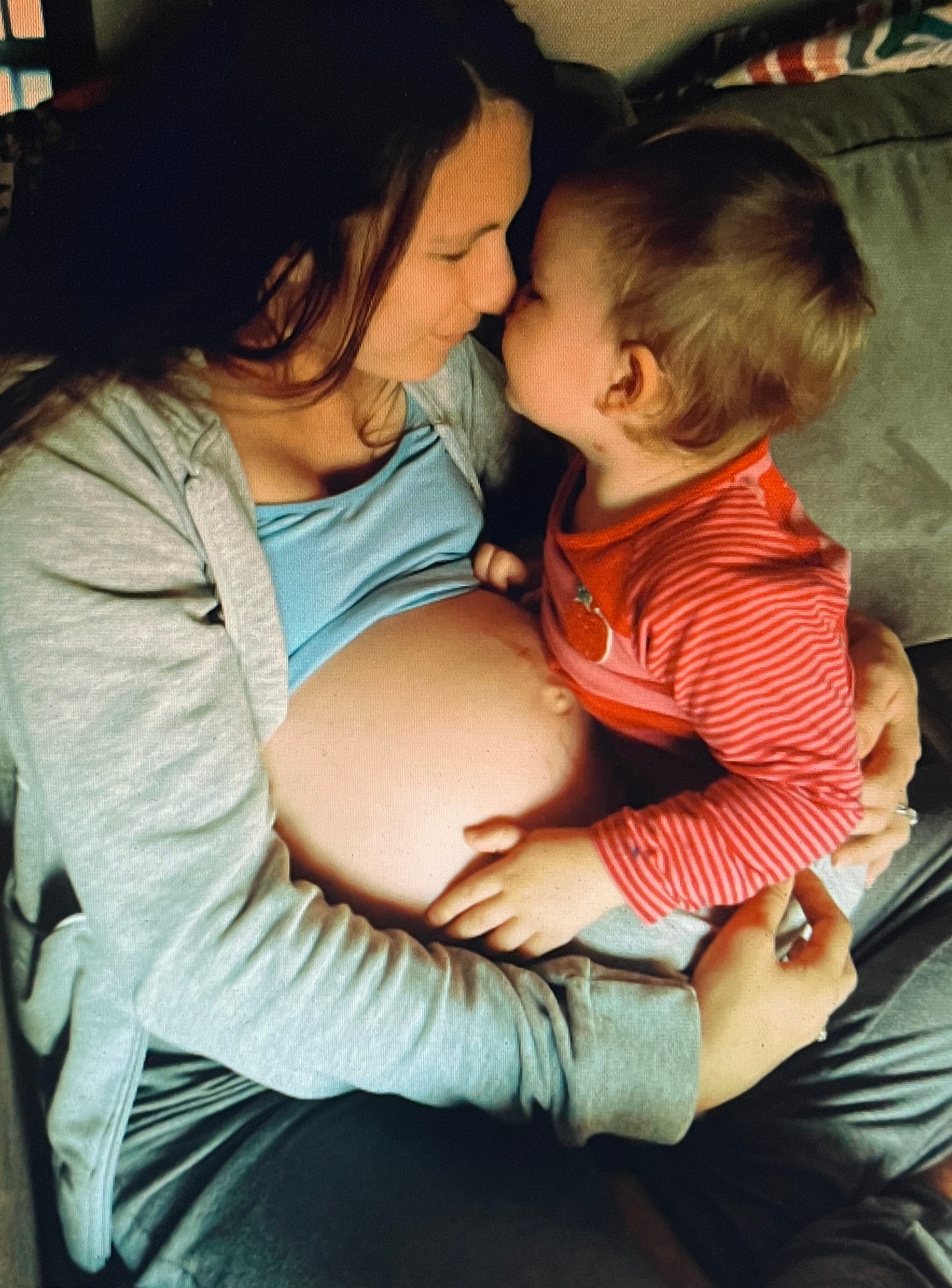
Then you were born, my Rowan. They lifted you from my body and passed you over the surgical drape separating me from my belly, squawking loudly in protest at the entire experience. They placed your sweet, plump cheek against my cheek and laid you across my chest. You stopped crying.
Then, I looked down at your perfect baby face and instantly I understood what I had not known before:
The human capacity for love is infinite.
Emily is not even telling me when she posts things like this. I have to happen to be scrolling to discover them. Just one of the many things I love about this particular mother—you, Emily—is this loving way you are with not only your children, but my children, and all people you come across and this little essay sums up why it is that you show up in the way you do—because you don’t see love as a finite resouce, as something that gets depleted. A long time ago, i was having a bit of an existential crisis and trying to decide: Am I someone who wants to have children in this life? And my dad said something beautiful that gave me permission to make whatever choice was right for me. He said, “You can have kids and pour your love into them, or you can give that love to other people in the world, both are good choices.” But now, reading what you wrote here it makes me think he got it wrong. The more people you love, your kids, your partner, your people, all people, the more love you have to give. It’s not a zero sum, it’s not give it to your kids or give it to the world, it’s start giving now so you can dig such a deep well of it that it pours out and onto everyone you meet. Happy mothers’ day, sweet Emily, and happy mothers’ day to my mom and all the mothers out there.
I’m not crying, you’re crying! Thanks for sharing this beautiful memory. And Happy Mother’s Day! 🫶🏻